
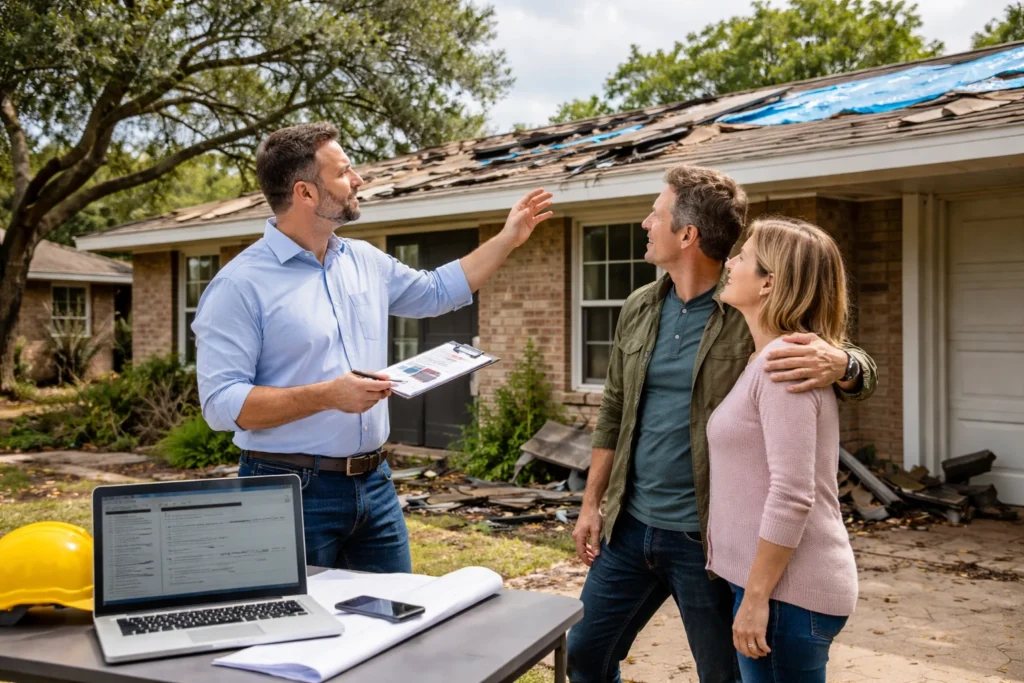
A storm rolls through Harker Heights. The wind howls. Hail hits hard. You step outside the next morning and see shingles scattered across the yard. Maybe there’s water staining the ceiling. Maybe worse. And then the question hits you fast: should I hire a public adjuster?
It’s a fair question. A serious one.
When property damage turns your routine upside down, you’re suddenly forced into a process you probably haven’t studied. Insurance policies. Estimates. Depreciation. Negotiations. Deadlines. It’s a lot. And the decision about whether to bring in professional representation can change the outcome of your claim in a big way.
Let’s break it down clearly. No fluff. Just practical guidance tailored for homeowners here in Harker Heights and across Central Texas.
What Does a Public Adjuster Actually Do?
Before answering should I hire a public adjuster, we need clarity on what they actually do.
A public adjuster is a licensed insurance professional who represents you, the policyholder — not the insurance company. Their job is to document, present, and negotiate your property insurance claim to pursue the maximum payout under your policy terms.
That’s it. They advocate for you.
Here’s what that typically includes:
- Reviewing your insurance policy in detail
- Interpreting coverage and exclusions
- Conducting a thorough damage inspection
- Preparing a comprehensive repair estimate
- Documenting hidden or secondary damage
- Managing paperwork and deadlines
- Negotiating directly with the insurance carrier
This is not the same as the adjuster your insurance company sends.
Quick Comparison
| Role | Who They Work For | Primary Goal |
| Insurance Company Adjuster | Insurance carrier | Protect company’s financial interest |
| Independent Adjuster | Hired by carrier | Evaluate on behalf of carrier |
| Public Adjuster | Homeowner | Maximize policyholder’s settlement |
That difference matters more than most homeowners realize.
Should I Hire a Public Adjuster After Storm Damage in Harker Heights?
Harker Heights is no stranger to severe weather. Hailstorms. Wind events. Occasional tornado threats across Bell County. Roofing systems take a beating. Fences snap. Water intrusion creeps in days later.
If you’re dealing with:
- Major roof damage
- Structural impact
- Fire loss
- Large water claims
- Denial letters
- Partial payment disputes
Then asking should I hire a public adjuster becomes more than casual curiosity. It becomes a strategic decision.
Here’s when hiring one often makes strong financial sense.
Situations Where Hiring a Public Adjuster Is Worth It
1. Large or Complex Claims
The bigger the loss, the higher the stakes.
A $5,000 claim is very different from a $150,000 structural rebuild. Large claims often involve:
- Code upgrade coverage
- Matching materials disputes
- Overhead and profit calculations
- Depreciation arguments
- Scope disagreements
When complexity increases, so does the risk of underpayment.
2. Denied or Underpaid Claims
You receive a letter stating your damage falls below the deductible. Or the payout feels suspiciously low compared to contractor bids.
This is where many homeowners pause and ask again: should I hire a public adjuster now?
If you suspect missed damage or improper scope, professional documentation and negotiation can reopen discussions.
3. You Don’t Have Time to Manage It
Insurance claims are not quick.
They involve phone calls. Site visits. Supplemental requests. Documentation. Follow-ups. More follow-ups.
If you work full time or manage family responsibilities, handling a claim properly can feel like a second job. A public adjuster absorbs that workload.
4. Commercial or Investment Properties
If you own rental property in Harker Heights or surrounding Central Texas communities, downtime equals lost income. Business interruption calculations can get complicated fast.
That’s not a space for guesswork.
When You Might Not Need One
Let’s be balanced.
There are times when the answer to should I hire a public adjuster is probably no.
- Minor cosmetic damage
- Small claims close to deductible
- Fast, fair payment from insurer
- Clear agreement on scope and pricing
If your insurer inspects, provides a detailed estimate, and your contractor confirms it’s accurate, hiring representation may not add meaningful value.
The key is knowing the difference between a smooth claim and one that only looks smooth on the surface.
Why Insurance Estimates Sometimes Miss Damage
Here’s a hard truth. Insurance company adjusters work under pressure. High claim volume. Tight timelines. Performance metrics.
Mistakes happen.
Common issues we see in Central Texas claims:
- Underestimated roofing squares
- Missed soft metal damage
- No allowance for full decking replacement
- Improper depreciation calculations
- Omitted overhead and profit
- No inclusion of code-required upgrades
One missed line item can cost thousands.
When homeowners ask me, should I hire a public adjuster for hail damage? — I often say this: if the roof is compromised and interior damage is involved, it’s worth at least getting a professional review.
The Money Question: How Are Public Adjusters Paid?
In Texas, public adjusters typically work on a contingency fee.
That means:
- No upfront payment
- No hourly billing
- They are paid a percentage of the settlement
If there is no recovery, there is usually no fee.
Typical Fee Structure
| Claim Type | Fee Range (Texas) |
| Residential | 5% – 15% |
| Commercial | 10% – 15% |
Texas law requires licensing and contract transparency. Always verify credentials with the Texas Department of Insurance.
Now the big question.
Is it worth paying a percentage?
If a claim increases significantly beyond what you would have recovered alone, even after fees, the answer may be yes. But it’s situational.
Real-World Example
Let’s say:
- Insurance initial offer: $42,000
- Contractor estimate: $68,000
- After negotiation: $64,000
- Public adjuster fee: 10%
Net to homeowner: $57,600
Even after the fee, that’s substantially higher than the original offer.
Every case is different. But numbers matter.
When asking should I hire a public adjuster, run the math.
Red Flags to Watch For
Not all adjusters operate ethically. Be cautious.
Avoid:
- Door knockers pressuring you to sign immediately
- Promises of “guaranteed” large payouts
- Requests for upfront fees
- Lack of Texas license
- Vague contracts
Quick Vetting Checklist
- Verify Texas license
- Ask for local references
- Review contract terms carefully
- Confirm fee percentage in writing
- Ask about experience with similar claims
Professional representation should feel steady and transparent — not aggressive.
Step-by-Step: How to Decide
Still wondering, should I hire a public adjuster? Walk through this framework.
Step 1: Assess Damage Severity
Is this surface-level repair or structural loss?
Step 2: Review Your Policy
Know your deductible. Understand replacement cost vs. actual cash value.
Step 3: Compare Estimates
Get at least one independent contractor bid.
Step 4: Evaluate Insurer Response
Are they communicative and thorough? Or dismissive and vague?
Step 5: Calculate Your Time
Can you manage inspections, supplements, documentation?
Step 6: Seek a Claim Review
Many public adjusters offer free consultations. No obligation.
Information first. Commitment second.
Common Harker Heights Claim Challenges
Central Texas properties face specific risks:
- Hail damage to composition shingles
- Wind-lifted roofing systems
- Fence and exterior structure losses
- Fire damage from electrical storms
- Slab leaks causing hidden water damage
Local building codes also impact repair scope. Code-required upgrades can significantly affect final claim value.
If your adjuster overlooks code compliance, you may leave money on the table.
Emotional Stress Matters Too
Insurance claims are financial. But they’re also emotional.
You’re dealing with disruption. Maybe displacement. Maybe family stress.
If you feel overwhelmed, that matters.
Sometimes the question isn’t just should I hire a public adjuster for financial reasons? It’s whether professional representation gives you breathing room.
Peace of mind has value.
Frequently Asked Questions
When is it too late to hire one?
As long as the claim is open or within policy deadlines, representation can often step in.
Can I switch mid-claim?
Yes. Many homeowners hire a public adjuster after an unsatisfactory initial offer.
Will hiring one slow down my claim?
Not necessarily. In many cases, organized documentation speeds negotiations.
Are they worth it for hail damage?
If damage is extensive or disputed, often yes.
Will my insurance company retaliate?
Insurers cannot legally retaliate for hiring licensed representation.
Do I still need a contractor?
Yes. Contractors perform repairs; adjusters handle claim negotiation.
So… Should I Hire a Public Adjuster?
Here’s the honest answer.
It depends.
If your claim is minor and straightforward, probably not. If your loss is large, complex, disputed, or underpaid — hiring representation can change the financial outcome dramatically.
The smartest move is not guessing. It’s getting informed.
Before deciding, ask:
- Do I fully understand my coverage?
- Am I confident the scope includes everything?
- Do I have the time and expertise to negotiate?
If you hesitate on any of those, it may be worth having your claim reviewed.
Because the real question isn’t simply should I hire a public adjuster?
It’s this:
Am I protecting my financial recovery as aggressively as my insurer protects theirs?
That’s the lens that matters.
If you’re a homeowner in Harker Heights facing storm, fire, or water damage and you’re weighing your options, a professional claim evaluation can bring clarity fast.
No pressure. No obligation. Just answers.
And sometimes, that clarity makes the decision obvious.